
Why Calgary Oil & Gas Companies Are Prime Ransomware Targets — And What To Do About It
Ransomware attacks on the oil and gas industry increased by 935% between April 2024 and April 2025, according to a report from cybersecurity firm Zscaler. Read that again: 935%. In a single year.
For Calgary companies operating in Alberta's energy sector, this isn't a distant headline — it's a direct threat. Calgary is home to one of the world's most concentrated collections of oil and gas companies, from major producers and oilfield service firms to pipeline operators and energy consultancies. That concentration makes the city a target-rich environment for ransomware groups actively hunting the energy sector.
This post explains why oil and gas companies are being targeted so aggressively, what makes Calgary energy firms specifically vulnerable, and the practical steps that actually reduce your risk.
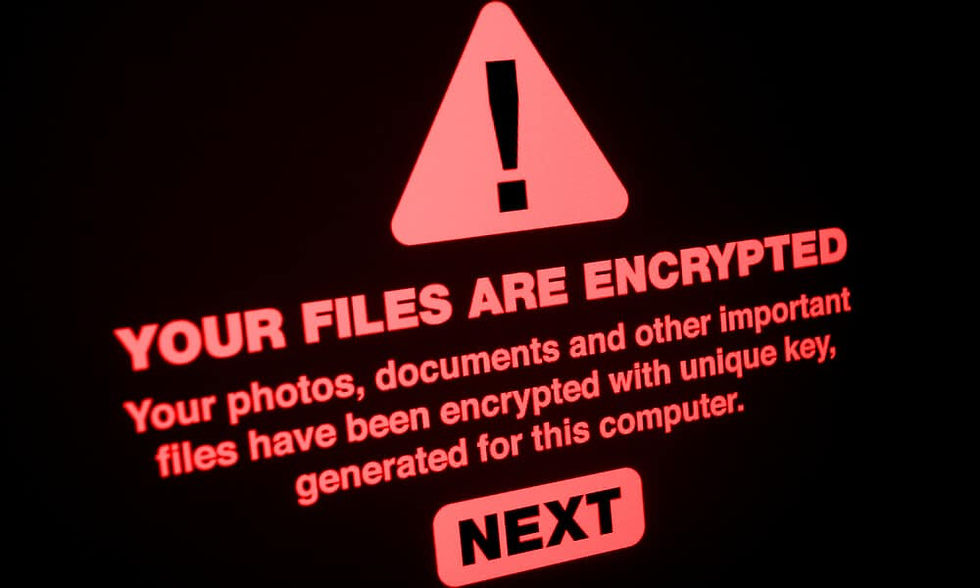
Why Is the Energy Sector Being Targeted So Heavily?
Ransomware groups are rational actors — they attack where they have the highest chance of getting paid. Oil and gas companies tick several boxes that make them attractive targets:
High Revenue, High Downtime Costs
Energy companies generate significant revenue and have very low tolerance for operational downtime. When production or operations are disrupted, the cost per hour can be enormous. Ransomware groups know this — and they price their ransom demands accordingly. A company facing millions in lost production per day is far more likely to pay a significant ransom than a business where downtime is merely inconvenient.
Increasingly Connected OT and IT Environments
Modern oil and gas operations rely on both IT systems (office computers, email, ERP software) and Operational Technology (OT) — the control systems, sensors, and automation managing physical assets in the field. As these two worlds become more connected, the attack surface grows. A breach that starts in your office email can potentially reach your field control systems. Zscaler notes that the sector's attack surface is expanding precisely because of this increasing digitization and connectivity.
Critical Infrastructure = Leverage
Energy supply is critical infrastructure. When it's disrupted, the pressure to restore operations quickly is enormous — not just for the company, but sometimes for entire communities or industries depending on that supply. That pressure translates directly into leverage for attackers demanding ransom.
The Canadian Angle
Canada's own cyber security agency, the Canadian Centre for Cyber Security, has specifically identified the oil and gas sector as a high-priority target for both financially motivated ransomware groups and state-sponsored actors. The agency's assessment notes that ransomware is almost certainly the primary cyber threat to the reliable supply of oil and gas to Canadians — and that state-sponsored groups from China, Russia, Iran, and North Korea are specifically targeting OT networks in the energy sector for geopolitical purposes.
The Halliburton ransomware attack in August 2024 cost the world's second-largest oil services company $35 million in losses after attackers forced the company to shut down IT systems. Calgary companies aren't too small to be next.
What Makes Calgary Oil & Gas Firms Specifically Vulnerable?
Beyond the industry-wide factors, Calgary energy companies face some specific vulnerabilities worth understanding:
Remote Field Operations
Calgary-based energy companies often have staff and equipment spread across remote locations in Alberta — from the oil sands to the Foothills to remote well sites. Maintaining secure, monitored connectivity between downtown offices and field operations is technically complex. Remote access tools, VPNs, and field devices are common entry points for attackers when not properly secured.
Third-Party and Supply Chain Exposure
The Alberta energy sector operates on a dense web of contractors, subcontractors, and technology vendors. Your cybersecurity is only as strong as the weakest link in that chain. A compromised vendor or contractor with access to your systems is a common initial access vector for ransomware groups.
Underinvestment in Cybersecurity
Many small and mid-sized Calgary energy companies have historically viewed cybersecurity as a concern for the majors. That assumption is now dangerously outdated. Ransomware groups increasingly target smaller companies in the supply chain precisely because they tend to have weaker defenses than the large producers — but are connected to high-value environments.
The Five Controls That Actually Make a Difference
Not all cybersecurity spending is equal. Here are the five controls that provide the highest protection for Calgary oil and gas companies specifically:
1. Multi-Factor Authentication (MFA) — Everywhere
The majority of ransomware attacks begin with compromised credentials — a username and password obtained through phishing or purchased on the dark web. MFA stops these attacks cold by requiring a second factor even when credentials are stolen. Deploy MFA on every system: email, remote access, ERP, cloud applications, and VPN. No exceptions.
2. Endpoint Detection & Response (EDR)
Traditional antivirus detects known threats. EDR — tools like Sophos Intercept X — monitors for suspicious behaviour in real time and can automatically contain a threat before it spreads across your network. For oil and gas environments, EDR is non-negotiable.
3. Email Security and Anti-Phishing
Phishing emails are the #1 initial access vector for ransomware. A quality email security solution filters malicious emails before they reach your staff and adds anti-spoofing protections (SPF, DKIM, DMARC) that prevent attackers from impersonating your domain. This is especially important for energy companies where invoice fraud and business email compromise are common attack types.
4. Tested Backup and Disaster Recovery
If ransomware does get in, your backup is your last line of defence. But a backup is only valuable if it works. Many Calgary businesses discover their backup was failing silently when they actually need to restore. Your backup should be automated, encrypted, stored offsite or in the cloud isolated from your primary network, and tested regularly with verified restore procedures.
5. Security Awareness Training
Your employees are both your biggest vulnerability and your best potential defense. Regular security awareness training — and simulated phishing campaigns that test whether training is working — dramatically reduce the likelihood that a phishing email leads to a breach. Given that many oil and gas employees work across multiple sites and devices, mobile-aware training is particularly important.
What About Cyber Insurance?
Cyber insurance is increasingly required by lenders, partners, and clients in the Alberta energy sector. But coverage is getting harder and more expensive to obtain — insurers are requiring specific security controls as a condition of issuing or renewing policies. MFA, EDR, email security, and documented backup procedures are now standard requirements for most cyber insurance policies.
West Wolf IT documents the security controls we deploy for our oil and gas clients specifically to support their cyber insurance applications and renewals. If your current IT provider can't provide that documentation, it's worth asking why.
The Bottom Line for Calgary Energy Companies
The threat to Calgary's oil and gas sector is real, growing, and increasingly well-resourced. The 935% increase in ransomware attacks on the industry isn't a statistical anomaly — it reflects a deliberate and sustained shift in targeting by sophisticated criminal groups who see energy companies as high-value, high-leverage targets.
The good news is that the controls that stop most ransomware attacks are well understood, not exotic, and entirely achievable for companies of any size. MFA, EDR, email security, tested backup, and staff training — implemented correctly and monitored consistently — stop the overwhelming majority of attacks before they cause damage.
West Wolf IT Solutions specializes in cybersecurity for Calgary's oil and gas sector. We deploy and manage enterprise-grade security tools — including Kaseya EDR and Datto MDR — scaled for Alberta energy companies of every size.


Comments